In the past 200 years, the world has been transformed by a succession of innovative new machines, inventions and gadgets. Great modern inventions include electric motor, telephones, computers, plastic and aeroplanes.
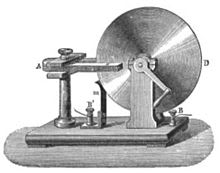
The Electric Dynamo – 1831 The invention of the electric dynamo by Michael Faraday opened up the practical use of electricity – from transport to power tools and home appliances.
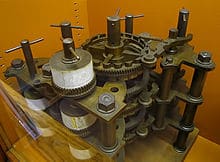
Computer – 1860s – Charles Babbage’s analytic engine is often seen as the forerunner of the modern computer. It had the ability to be programmed and calculate mathematical equations From these early experimental machines, we saw the development of later electronic versions. Although the electronic computer wasn’t really developed until after the 1940s.
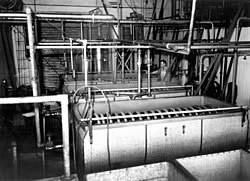
Pasteurisation – 1864 Developed by Louis Pasteur. This provided a way to prevent the growth of bacteria in substances such as wine, beer and milk. It made milk safer to drink.
Plastic – 1869 Developed by John Wesley Hyatt. Hyatt was an American printer and inventor. He was looking for a cheap substitute to ivory billiard balls. Hyatt combined cellulose nitrate and camphor to produce a mouldable versatile material – celluloid. Plastic has transformed the world and has become ubiquitous in packaging, homes and even clothes. Its ubiquity is causing the world to be more concerned about the effects of plastic pollution because it doesn’t biodegrade.
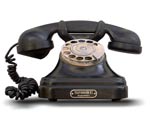
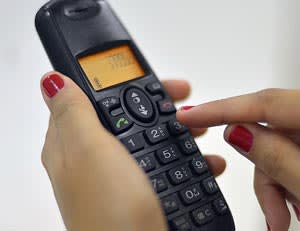
Telephone – 1876 The telephone was invented in 1876 by Alexander Graham Bell. Scottish born Bell was a teacher for the deaf at Boston University. In researching ways to teach the deaf, he experimented with transmitting sound via electricity. Teaching by day, he spent many hours of his spare time, developing a form of telephone. He applied for a form of patent on March 7, 1876. Within five years, private telephone exchanges were in place in most US cities. It was an invention that caught on very quickly.
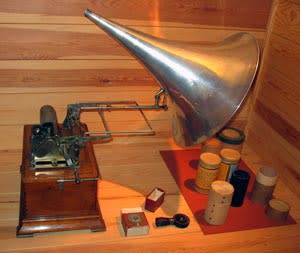
Phonograph – 1877 Thomas Edison found that sound could be captured and replayed using a rotating cylinder covered with paraffin paper and a stylus. In December 1888, Edison applied for a patent and over the next few years helped to develop the modern gramophone based on the wax-cylinder model.
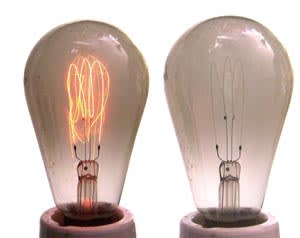
Lightbulb – 1879 Throughout the nineteenth century, inventors produced simple electric lights. For example, Joseph Swan produced a simple electric light, but, he struggled to maintain a power source and the filament soon burned out when the vacuum was exhausted. It was Thomas Edison who made the lightbulb into a practical low current version. He used a filament based on a burned sewing thread.
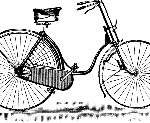
Bicycle 1885 – Velocipedes were invented early in the nineteenth century. The most popular at the time was the Penny Farthing, with its huge big wheel. But, the big advancement in bike technology came with the introduction of a chain to link pedals to back wheel. This enabled a higher speed without relying on a huge wheel. The key model in the chain bike was the Rover Safety bike developed by John Kemp Starley.
Aluminium 1886 Until the 1890s, Aluminium was considered a precious metal because it was so hard to isolate. However, Ohio chemist, Charles Martin Hall discovered how to isolate Aluminium, through a process of electrolysis. This simple method enabled high quantities of aluminium to be produced. Its price fell from $18 a pound to 18 cents. Aluminium has become one of the most popular and versatile metals in industry.
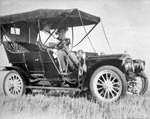
Motor Car – 1898 By 1898 the German engineer Karl Benz produced the first modern automobile using a patented internal combustion engine. The car used electrical ignition, a water-cooled internal combustion engine and different gears. With a few decades, motor cars were within reach of many ordinary people, transforming society, where we live and how we spent vacations.
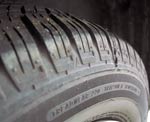
Pneumatic Tyre – 1888 Invented by John Boyd Dunlop; it was developed as a way to make tricycle riding more comfortable. His first attempt involved using an old garden hose fitted with air. He later developed this idea using a rubber pneumatic tyre and filed for a patent in 1888. It was later used on both bikes and motor cars.
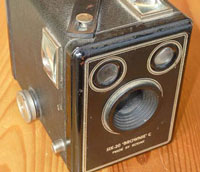
Camera – 1888 – Louis Daguerre made a breakthrough with a camera which took imprints to be developed by chemicals. In 1888, George Eastman developed the first small Kodak box camera which made photography much more accessible to the public.
Transatlantic Telegram 1901 G. Marconi developed the first long-distance wireless communication. On 12 December 1901, the first telegram was sent across the Atlantic in Morse code. His invention was developed into the ‘wireless’ or the radio. The telegram was very much the internet of its day. It revolutionised communication in a similar way, bringing the world much closer.
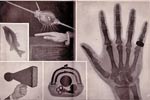
X-Ray Machines (1914) The X-Ray was first discovered by W. Roentgen in 1895. Marie Curie developed this discovery and through her work by 1914 and been able to successfully create an X-ray machine which could be used to take images of the human skeleton.
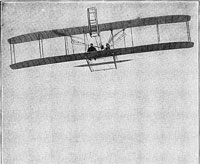
Aeroplane 1903 – The Wright brothers piloted the first successful heavier than air aeroplane on Dec 17th, 1903. Within a few years, aeroplanes were successfully navigating long distances and soon began to transform both wartime and global travel.
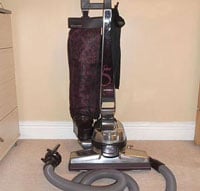
Vacuum – 1908 James Murray Spangler invented the electric vacuum cleaner. The first model used a broomstick, pillow and a box containing electric motor and fan. He applied for a patent in 1908. William Hoover helped finance its development for the mass market.
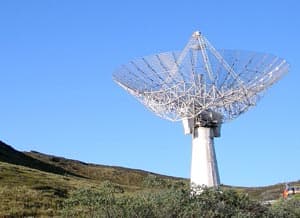
Radar 1924 – Edward Appleton developed a way of detecting aircraft using sonic radar. This proved useful in the Second World War for the British who pioneered the use of radar and was a key factor in the Battle of Britain where radar was able to give warnings of approaching German planes.
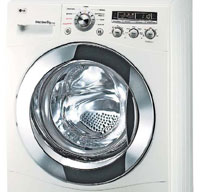
Automatic washing machine (1950s). Before indoor plumbing and automatic washing machines, cleaning clothes was a time consuming and laborious process. The automatic washing machines saved housewives countless hours of unpaid labour and freed many women to consider other activities, such as work. Early washing machines were developed in the late nineteenth century. But, post-war the electric automated washing machine made a huge difference.
Artificial intelligence (AI) 1955. Artificial intelligence or machine learning is defined as the situation where machines can learn by themselves and improve their method of working overtime. In 1955, Newell and Simon pioneered AI by creating a programme which sought to solve a problem by choosing the branch which was most likely to solve it. Over time AI has evolved, especially with the use of mass data and improved computer processing. AI is being used in fields from medicine to self-driving cars.
The container – 1956. The humble steel container may seem so obvious that it hardly warrants as an invention. But, the container revolutionised international trade, significantly reducing costs and making the transport of goods across different forms of transport much easier. It is a key factor in the exponential rise of trade and globalisation in the post-war period.
Email 1972 – The first true email system was MIT’s CTSS MAIL, in 1965. But, it only worked for those logged into the system. Email networks included the first ARPANET email sent in 1972 developed by Ray Tomlinson.
Internet – 1973 – Early forms of networking computers developed in the late 1960s. In 1973, Vint Cerf and Bob Kahn developed Control Protocol (TCP) and Internet Protocol (IP) which was an important landmark in creating a global network of interconnected computers which could share information.
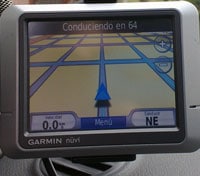
GPS – Global Positioning System (1973) GPS was developed by the US military in 1973, it enables a user to know the precise location of an object or person. In the 1980s, use was opened to civilians and has led to effective sat-nav systems and combined with the internet has led to very precise Apps, like Google Maps.
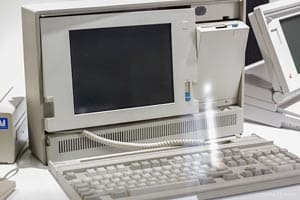
The Personal computer 1980s – In the 1980s, the microchip enabled households to have their own personal computer. This enabled people to print letters, use for relaxation and multiple other uses, such as working from home.
The Mobile Phone 1980s – The mobile phone enabled people to take calls on the move, rather than be tied to a landline. Mobile phones also enabled text messages to be sent.
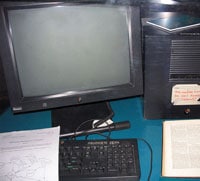
World Wide Web 1990 – Tim Berners Lee wrote software for the World Wide Web (WWW) in 1990. This helped to revolutionize the internet and provide a permanent store for information on webpages which were easily accessible. Berners-Lee also wished to make his invention freely available to the world.
WiFi 1990s – Wifi or wireless fidelity is a technology which allows users to access the internet without a cable. It is also known as WLAN – wireless local area network. It involves a router connected to internet by cable and then an adapter to pick up a signal from the router. In 1997, Vic Hayes established many protocols which made WiFi technology popular.
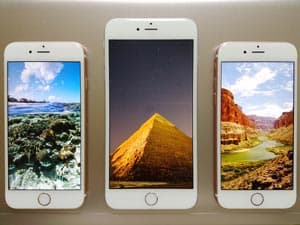
The Smartphone (2007) The Smartphone combined many technologies in one. The modern smartphone has enabled calls, texts, internet access, camera and a variety of apps. Steve Jobs played a key role in developing the first smartphones.
Citation: Pettinger, Tejvan “Modern inventions that changed the world”, Oxford, UK. www.biographyonline.net – 10th March 2015. Last updated 5 March 2020.
Scientists – Famous scientists from Aristotle and Archimedes to Albert Einstein and Charles Darwin. Including mathematicians, biologists, physicists and chemists.
Ideas that changed the world – Scientific, political, religious and technological ideas that transformed the world. Including democracy, feminism, human rights and relativity.
Inventions that changed the world – Famous inventions that made a great difference to the progress of the world, including aluminium, the telephone and the printing press.






 Scientists – Famous scientists from Aristotle and Archimedes to Albert Einstein and Charles Darwin. Including mathematicians, biologists, physicists and chemists.