Vladimir Putin (born 7 October 1952) is a Russian politician who served as Russian President from 2000 to 2008, and from 2012 onwards. Between 2008-2012, he served as Russian Prime Minister making him the most powerful and de facto leader in Russia during this time in office. Since 2012 he has served as Russian President and has embarked on efforts to strengthen “Russia’s strategic interests” culminating in the invasion of Ukraine in February 2022.
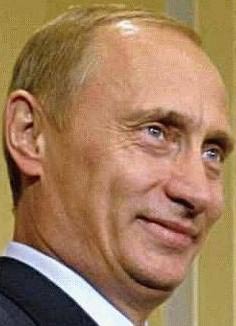
Putin studied Law at Leningrad State University, writing a PhD thesis on the importance of energy policy for future Russian economic success. After graduating in 1975, he joined the KGB. He was involved in monitoring foreigners and consular officials in Leningrad. From 1985 to 1990 he was posted to Dresden, East Germany. On the collapse of the East German government, he returned to Leningrad where he was involved in surveillance of the student body.
In August 1981, there was an attempted coup by Communist hard-liners with links to military and KGB against Mikhail Gorbachev. On the second day of the putsch, Putin resigned from the KGB and sought to pursue a political career. Putin said the decision to resign from the KGB was hard, but he didn’t support the direction of the coup and the hard-liners.
In 1997, Boris Yeltsin appointed him to the position of deputy chief of the Presidential staff. In 1999, with the backing of Yeltsin, he was voted as Prime Minister of Russia. When Yeltsin, unexpectedly resigned a few months later, Putin became the default President of Russia.
During the early years of his Presidency, Putin gained substantial popular backing because of his hard-line on military issues (such as the war in Chechnya) and overseeing a return to economic stability. He cultivated a macho ‘action man’ image of fearless leader and sportsman, helped by his sporting and KGB past. This image was attractive to voters. After a decade of inflation and falling living standards, during the 2000s, Russia embarked on a sustained period of economic growth, falling unemployment and rising living standards. The strong performance of the economy was attributable to the rising price of oil and gas (increasing value of Russia’s exports) and strong macroeconomic management.
Early in his leadership, he came to an arrangement with the new Russian ‘oligarchs’ powerful businessmen who had gained control of formerly state-owned industries. Putin made a deal where they agreed to start paying tax and avoiding politics, in return for leaving them free to pursue their business interests. This helped raise revenue for the government and reduced the political influence of the Oligarchs.
In 2008, unable to run for a third term as President, he ran for Prime minister, with his dual political aid Medvedev becoming President. However, it was Putin who remained the most powerful figure.
In 2012, Putin was re-elected for a third term as President, however, for the first time, this led to widespread protests at the lack of democracy in Russia. Increasingly, Putin’s regime has been criticised for being dictatorial and avoiding a true democracy.
For example, former Russian President Gorbachev, who was initially a supporter of Putin said he was disappointed by the increased disrespect for democracy and authoritarian tendencies. In 2007, Gorbachev said Putin had ‘pulled Russia out of chaos’. But, in 2011 criticised Putin for seeking a third term as President. Gorbachev was severely critical of the 2011 elections. “The results do not reflect the will of the people,” Mr Gorbachev said at the time. “Therefore I think they [Russia’s leaders] can only take one decision – annul the results of the election and hold new ones.” (Gorbachev calls on Putin to resign)
On July 28, 1983, Putin married Lyudmila Shkrebneva. They have two daughters, Maria Putina (born 1985) and Yekaterina (Katya) Putina (born 1986 in Dresden). Putin himself is a practising member of the Russian Orthodox Church. His religious awakening followed the serious car crash of his wife in 1993 and was deepened by a life-threatening fire that burned down their dacha in August 1996. Right before an official visit to Israel, his mother gave him his baptismal cross telling him to get it blessed “I did as she said and then put the cross around my neck. I have never taken it off since.”
Putin has been hailed by Patriarch Alexius II of the Russian Orthodox Church as instrumental in healing the 80-year schism between it and the Russian Orthodox Church outside Russia in May 2007. Putin was supportive of the Russian Orthodox church in supporting the imprisonment of members of ‘Pussy Riot’ the pop group who protested about Putin and the Church. However, the decision to imprison members of Pussy Riot was widely condemned across the world for breaching human rights.
2014
In March 2014, in the wake of turmoil in Ukraine, Putin authorised the use of Russian troops to enter the region of Crimea. Shortly after, a referendum was organised where a majority of people voted to leave the Ukraine and rejoin Russia. There was criticism over the legitimacy of the referendum, but Crimea has effectively left Ukraine for Russia. The issue over Ukraine has led to increased tension between Russia and the West.
2016 US election
During the 2016 US election, it was alleged that Russian operators sought to influence the 2016 Presidential election by posting social media items which helped Donald Trump and hindered Hilary Clinton. Similar allegations were made with regard to the UK vote on Brexit. Although Putin denies influencing elections, there is evidence Russian foreign policy is geared towards destabilising Western democracies and weakening the NATO alliance. A long-standing grievance of Putin is the eastward expansion of NATO after the end of the cold war.
Under Trump, the NATO alliance was weakened, with Trump being the most pro-Russian president in modern times. However, later actions in the Ukraine had the effect of uniting the west and made NATO membership for Finland and Sweden appear more attractive.
2018 Russian election
In 2018, Putin won a fourth Presidential term, with 76% of the vote. Political opponents argue the system is rigged with opposition candidates placed under arrest or prevented from actively campaigning. Putin has suggested he will not run again in 2024, but his party United Russia have a powerful monopoly on local and national elections, and it is not certain when this will be ended. Putin’s regime has become increasingly authoritarian with opposition leaders being given the choice of ‘go west or go east’ – West meant to leave the country, east means to the Siberian prison camps. Notable opposition leader Alexei Navalny survived an attempted poisoning but on surviving choose to return to Europe where he was arrested on trumped up charges.
2022 Ukraine invasion
In early 2022, Russian troops massed on the border of Ukraine, with US and UK authorities warning an invasion of Ukraine was imminent. This was denied by the Kremlin but on 25 February Russian armoured units entered Ukraine. Putin claimed it was a ‘special military operation’ but heavy fighting and shelling began on Ukraine’s major cities Kyiv and Kharkiv. In response to the illegal invasion, western countries imposed severe economic sanctions on Russia, which led to a sharp drop in the Ruble and Russian stock market. Many analysts were surprised at the reckless gamble taken by Putin as it leaves the country increasingly isolated and an international pariah after being excluded from major sporting and cultural events as well as economic sanctions.
Citation: Pettinger, Tejvan. “Biography of Vladimir Putin”, Oxford, UK. www.biographyonline.net Published 23rd May 2012. Last updated 1 March 2022.
Vladimir Putin and Russian Statecraft
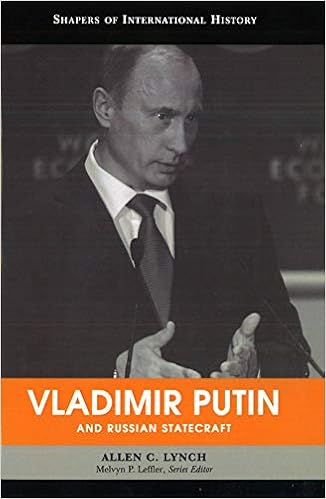
Vladimir Putin and Russian Statecraft at Amazon
Related pages